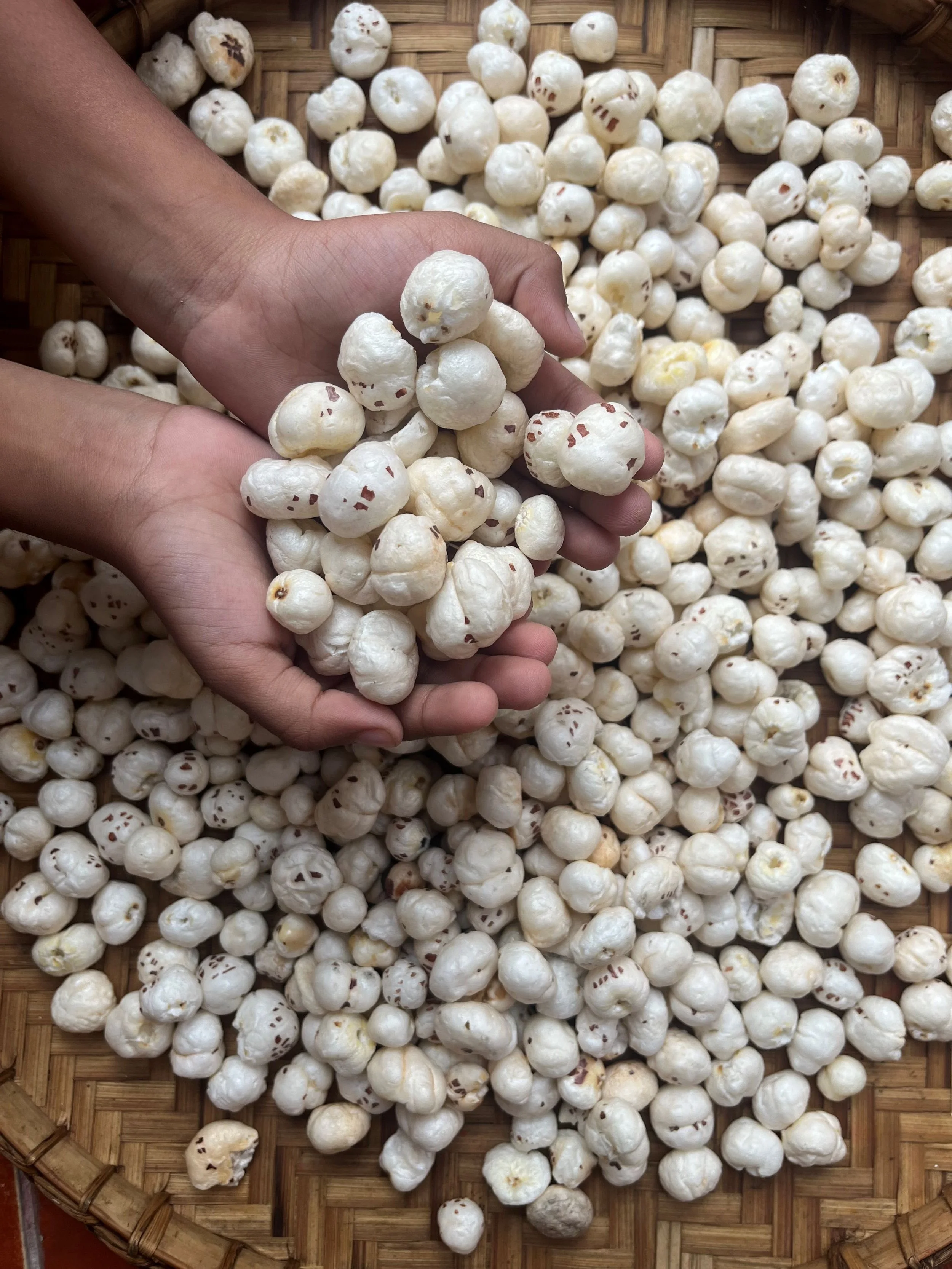
Makhana Madness: The Indian Pantry Staple Getting a Facelift
Your grandmother kept makhana in a steel dabba for fasting days. Your gym-bro cousin now carries Peri-Peri flavored fox nuts in pastel pouches with QR codes. Same product. Different century.
Welcome to the makhana boom, where India's 500-year-old pantry staple just discovered branding, learned to wear Coffee Caramel and Wasabi like runway looks, and positioned itself as the protein snack Silicon Valley didn't know it needed. The market that was worth ₹8.5 billion in 2024 is projected to nearly double by 2033. Bihar farmers who grow 80% of the world's makhana are now feeding global "proteinfication" trends they've never heard of.
From Fasting Food to Fitness Fuel
Makhana was never supposed to be cool. It was what you ate during vrat, when nothing else was allowed. Plain, roasted over low heat, maybe with a little ghee and sendha namak if you were feeling indulgent It was, by design, the opposite of pleasure.
Then someone did the math. 9.7 grams of protein per 100 grams. Low fat. Low calorie. High fiber. Gluten-free. Plant-based. Basically, makhana checked every box the wellness economy was looking for, except it came from Bihar instead of a California startup with venture funding.
The Design Facelift
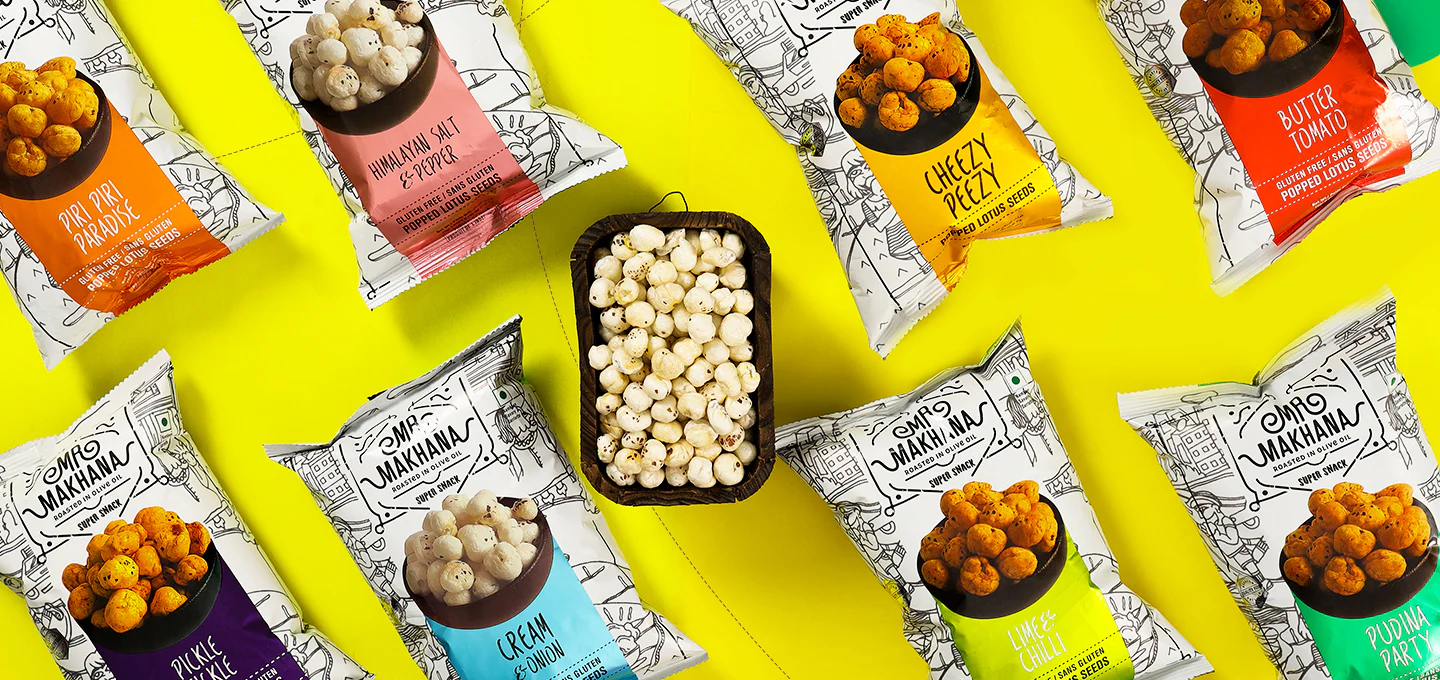
Walk into any modern retail store now and you'll see what's happened. Makhana has been repackaged, rebranded, and repositioned. Gone are the plain plastic bags with handwritten labels. Enter: stand-up pouches with matte finishes, transparent windows showing the product, minimalist typography, and flavor names that sound like they were workshopped by a creative agency.
Farmley sells makhana in reusable glass jars that look like they belong on an influencer's kitchen counter. Sattviko took the ayurvedic route- infusing flavors with turmeric, ashwagandha, and basil while keeping the design clean and modern. Bonvie went global with Coffee Caramel and Wasabi flavors, targeting urban Millennials and Gen-Z through D2C channels. Lotus Makhana launched Makhana Pops in Mumbai with DIY seasoning packets, letting consumers customize their flavor journey.
The transformation isn't just visual. These brands have recontextualized makhana entirely. It's "high-protein, low-calorie, plant-based superfood for active lifestyles."
The Proteinfication Economy
This is happening because the global snacking economy is undergoing a protein revolution.
The West has been chasing this with protein bars, chickpea puffs, and cricket flour. Meanwhile, India had makhana sitting in every household, doing exactly what the market wanted, centuries before the market wanted it. It just needed someone to tell that story in a language modern consumers understood.
Enter the design-led D2C brands. They didn't invent makhana. They invented the idea that makhana was something worth paying ₹200 for in a pretty pouch instead of ₹50 in a plastic bag. They took a commodity and turned it into a category. T
The flavors help. Peri-Peri, Thai Chilli, Cheese & Herb, Barbeque, Pickle, Pudina, Tangy Tomato, Caramel, these aren't traditional preparations.
The packaging seals the deal. Resealable zip-locks. Nutritional breakdowns printed clearly. Certifications (organic, GI-tagged, FSSAI-approved) displayed prominently. Sustainable materials signaling values alignment. Every design choice reinforces the same message: this is premium, this is modern, this is for you.
India Was Always Ahead
India has been sitting on a portfolio of superfoods that meet every criterion the wellness economy demands. High protein. Low calorie. Plant-based. Nutrient-dense. Culturally embedded. Sustainably grown. We just never marketed them as such.
Makhana is the test case for what happens when Indian food traditions meet modern branding. When local knowledge gets global packaging. When what grandmothers knew becomes what nutritionists recommend.
The success of Farmley, Sattviko, Bonvie, and dozens of other brands proves something important: Indian snacking culture was ahead of the curve all along. We had the products. We just needed the presentation.
So the next time you see makhana in a matte-finish pouch with a minimalist logo, remember: this isn't a new invention. It's a very old food that finally got the recognition it deserved. The proteinfication economy didn't create makhana. It just caught up to what India already knew.
We've been snacking smart for centuries. The rest of the world is just now realizing it.



Let’s keep in touch.
Discover more. Follow us on Substack and Instagram.