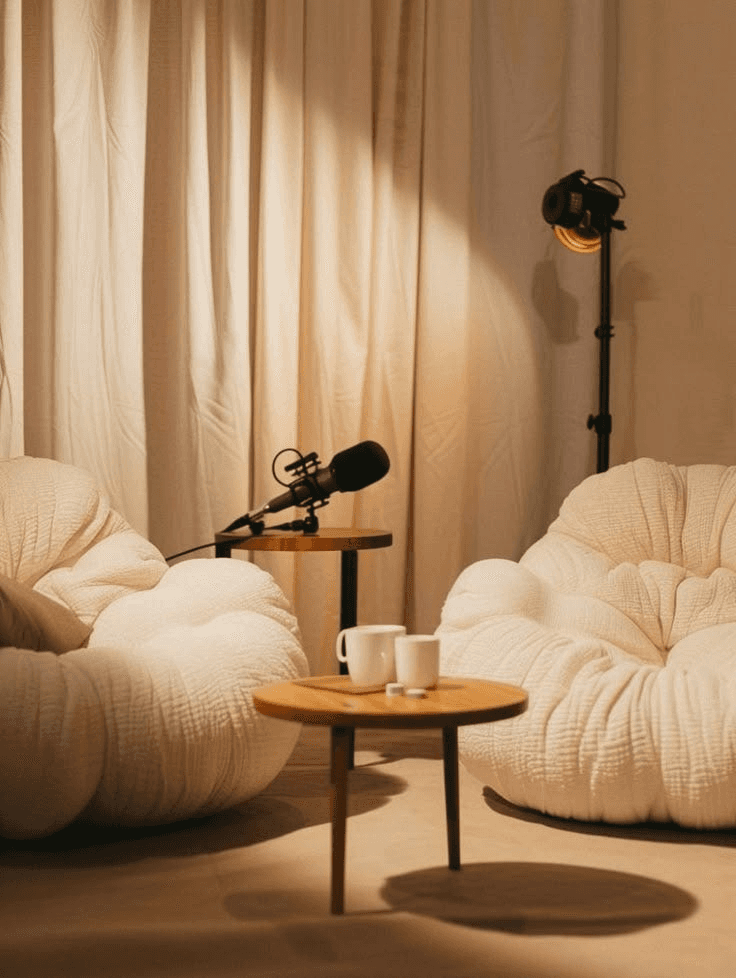
Should your brand start a podcast?
Every brand seems to be flirting with audio right now. Founders are launching interview series. Consumer brands are experimenting with branded storytelling. Agencies are quietly building in-house studios.
Podcasting in India is no longer niche. It has over 57 million monthly listeners, India is already the third-largest podcast market globally. The audience skews young, highly engaged, and increasingly habit-driven. Listening has slipped into daily life, during commutes, workouts, chores, late-night wind-down routines.
For brands, that kind of attention is tempting but they need to ask themselves if they need one or just like the idea of one?
Here’s what brands should understand - Podcasts are not just content, they’re a commitment. Unlike social posts or short-form videos, podcasts are slow media. They require consistency, patience, production discipline and audience cultivation. You cannot “campaign” your way into podcast relevance. The brands that succeed in audio treat it as infrastructure and not a marketing stunt.
If you are looking for quick acquisition or vanity metrics, podcasting will frustrate you.
It makes sense why brands would start their own podcasts.
It provides depth of attention and attracts active listeners and not just passive scrollers. That level of voluntary attention is rare in given the attention deficit. For a brand, that’s not exposure - that’s intimacy. Moreover, it’s giving them the opportunity to control the narrative. There’s a tendency for algorithms to decide the visibility bu this way the brands can expand beyond product features, actually show their alignment with values and build intellectual positioning.
Podcasting is part of a larger shift toward conversational media. It mirrors India’s long-standing relationship with storytelling, from radio dramas to serialized fiction to mythological retelling. Entertainment and self-improvement dominate Indian podcast consumption. That tells us something: listeners are looking either to be absorbed or to be elevated.
Brands can exist in that space but only if they understand it.
The bar is higher for Brands
Here’s the uncomfortable truth: Branded podcasts must be better than non-branded ones. Podcast listeners are savvy. They know when they are being sold to. The tolerance for disguised advertising is low. The competition is not other brand podcasts. It’s every other show in a listener’s queue. If your show cannot stand independently, if it cannot compete on storytelling, insight, or value, the brand association will not save it.
The biggest mistake brands make is assuming a podcast is an extension of their “About Us” page. The most successful branded podcasts are rarely about the brand itself. They’re about shared territory, common interests between the brand and its audience.
Podcasting in India is still in its audience-building phase. Monetization models are evolving: ads, sponsorships, paid subscriptions, micro-tips but the real currency right now is engagement.
Podcasting rewards consistency.
It punishes inconsistency.
When a Brand Should Start a Podcast
A brand should consider launching a podcast if it has a clear point of view beyond its products and is willing to invest in storytelling quality. It’s also important to understand that growth will be gradual and use it as a tool for brand building and not performance marketing.
However, as a brand, you should not a podcast because not everyone else is doing it, you want to repurpose LinkedIn posts into audio, or you think it will be replace advertising.
It is a format that magnifies intention or, in some cases, exposes its absence.
India’s podcast ecosystem is still early.
This is not just a marketing channel. It is a medium that aligns with how people think, reflect, and learn. The brands that approach it thoughtfully with humility, craft, and patience will not just gain listeners, they will gain credibility.
In a crowded, trust-deficit digital economy, that may be the most valuable return of all.



Let’s keep in touch.
Discover more. Follow us on Substack and Instagram.