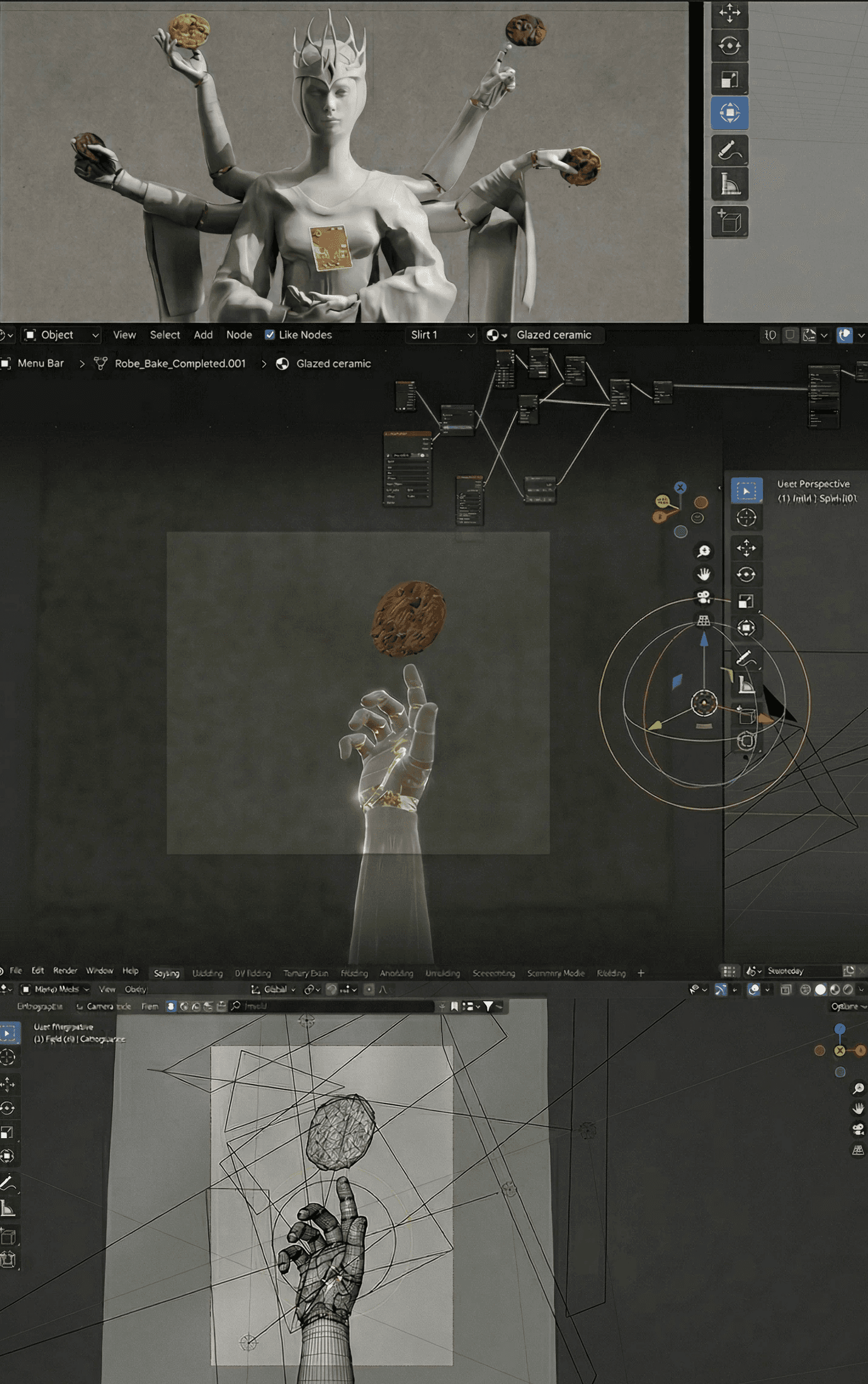
The Agency Advantage:
Are design agencies better equipped to build brands?
The design agencies that built careers shaping other people's brands are starting to build their own and they're doing it with tools that didn't exist five years ago.
The shift is quiet but persistent. Studios that spent decades translating client visions into tangible products have begun asking a different question: what if we kept the good ideas for ourselves? What if the insights gathered from a hundred product launches, the pattern recognition developed across industries, the prototyping infrastructure already in place, could be redirected toward something owned rather than billed by the hour?
The answer is appearing in unexpected places. Small-batch consumer goods. Furniture collections. Wellness products. Cookware. Beauty tools. Digital-first brands that feel strangely complete from day one, because they were designed by people who've done this hundreds of times before just never for themselves.
Design agencies sit at a rare intersection. They possess taste, technical capability, and manufacturing relationships. They've seen hundreds of briefs from founders who had passion but lacked execution knowledge, and they've watched expensive mistakes happen in real time. They know what works because they've prototyped what doesn't, on someone else's dime.
More importantly, they have the infrastructure to test ideas before committing capital. CGI rendering has become sophisticated enough to create photorealistic product imagery without manufacturing a single unit. Social media allows A/B testing of concepts with actual audiences before tooling is commissioned. Design agencies can validate demand, refine positioning, and iterate on form factor, all in the digital realm, where changes cost hours instead of tens of thousands.
The traditional path to launching a consumer brand involves significant upfront investment. Tooling. Minimum order quantities. Inventory risk. Marketing spend to find product-market fit. Then the painful discovery that the market wanted something slightly different, or the positioning was wrong, or the price point missed the mark.
Design agencies can collapse that timeline and reduce that risk. They can render a product that looks production-ready, place it in hypothetical contexts, photograph it in imagined environments, and gauge market response. If the concept resonates, they have the CAD files, material specifications, and vendor relationships to move into production quickly. If it fails to generate interest, they've lost creative hours, which agencies bill anyway.
This creates an unusual testing ground. Ideas can be floated with relatively low commitment. Market feedback arrives before manufacturing begins. The concept either earns the right to exist or gets shelved without the typical sunk costs.
The agencies doing this well approach it with the same discipline they bring to client work. They're testing hypotheses. Running small experiments. Building only what the market signals it wants. The difference is that they own the upside if something connects.
When agencies like that decides to create its own product, they starts with advantages most founders spend years acquiring: a deep understanding of how brands function in contemporary media environments, access to production capabilities, and taste refined through exposure to the best work being done globally.
The most interesting part is what agencies choose to build. These aren't copycat products or category-chasing ideas. They're often highly specific, addressing gaps agencies have observed while working across industries. A particular material application no client would fund. A form factor they've wanted to explore but couldn't justify on project budgets. A market opportunity too small for a large brand but viable for a focused effort.
The infrastructure advantage extends beyond prototyping. Agencies already employ designers, art directors, copywriters, brand strategists, and production specialists. The team required to launch a consumer brand already exists. The capabilities needed to execute a photoshoot, develop packaging, create a website, and produce marketing assets are sitting on the payroll. What gets billed to client projects during the week can be redirected toward proprietary products on weekends.
This isn't to suggest success is guaranteed. Plenty of agencies have launched products that went nowhere. Design expertise does not automatically translate to business acumen. Understanding how to create beautiful things does not mean understanding how to sell them at scale. Distribution, logistics, customer acquisition, retention are separate skill sets.
But the optionality is different. An agency testing a product idea can afford to be patient. They can iterate slowly, release small batches, refine based on actual feedback, and only scale when the market pulls product from them rather than pushing it onto customers. Client work funds this experimentation. The agency doesn't need the product to succeed immediately because it's not the primary revenue source.
This creates space for building something genuinely good. No pressure to overpromise in marketing because revenue targets demand it. No incentive to cut corners on production because margins are too tight. The freedom to say "this isn't ready" and keep refining. The ability to kill ideas that aren't working without triggering an existential crisis for the business.
The CGI capability deserves particular attention. Photorealistic rendering has reached a point where consumers often can't distinguish digital imagery from photography. This means agencies can create entire product campaigns—hero shots, lifestyle imagery, detail close-ups, without owning physical inventory. They can test packaging variations, colorways, and styling approaches digitally, then only produce what performs best.
This inverts the traditional sequence. Instead of manufacture then market, it becomes market then manufacture. Validate demand before committing capital. See what resonates before locking in tooling. Refine positioning based on how people actually respond to the concept.
Skeptics will point out that CGI can misrepresent what's achievable in production. That digital perfection doesn't account for material limitations, manufacturing tolerances, or real-world usability. All true. But agencies designing products for themselves already know these constraints intimately. They're not rendering fantasy objects, they're visualizing products they have the technical knowledge to actually produce. The rendering is speculative, but informed.
The question becomes: does this create better brands?
Possibly. Agencies building for themselves can take risks clients wouldn't approve. They can pursue aesthetics that feel too distinct for mass market but work for specific audiences. They can build products that solve small problems beautifully rather than trying to be everything to everyone. They can prioritize craft in ways that quarterly earnings calls wouldn't allow.
They also tend to be design-led in ways that feel authentic rather than performed. When a design agency creates a brand, the design isn't marketing, it's the foundation. The product exists because the form factor was interesting, the material application was novel, or the use case was underserved. The brand builds from that core insight rather than dressing up a generic product in appealing visual language.
This matters in saturated markets. Consumers have developed filters for performative design, brands that look the part but feel hollow underneath. Something built by people who actually care about material quality, proportion, detail resolution, and user experience tends to carry a different weight. It's the difference between someone who knows what good design looks like and someone who knows how to make it.
The downside is scale. Agencies are structured to deliver client work profitably. Adding proprietary products creates competing priorities. Time spent on your own brand is time not billed to clients. Resources allocated to inventory are resources not available for hiring or infrastructure. Growth in one area often means constraints in another.
Some agencies solve this by treating proprietary products as R&D. The learning from developing their own brands feeds back into client capabilities. Prototyping techniques refined on internal projects get applied to external ones. Material sourcing relationships developed for proprietary products benefit client work. It becomes a virtuous cycle where each effort strengthens the other.
Others separate the efforts entirely. Spin out the brand as its own entity, funded separately, operated independently. This clarifies incentives and avoids conflicts but requires raising capital and building business infrastructure, the very things agency principals often want to avoid.
The third path is to keep it small. Produce limited editions. Collaborate with manufacturers on special runs. Treat the brand as a creative outlet rather than a growth business. Accept that it will remain boutique and optimize for quality over quantity. This preserves the agency's core business while allowing expression the client work doesn't accommodate.
Whichever path agencies choose, the phenomenon reveals something about contemporary brand building. The tools exist to test ideas cheaply and iterate quickly. The capital requirements for launching certain types of products have dropped dramatically. Distribution through e-commerce and social platforms removes traditional retail gatekeepers. The barriers that once separated "agency" from "brand" have become permeable.
This creates opportunities for people with taste and technical skill to build things they've only imagined while serving clients. Whether these efforts produce lasting brands or interesting experiments remains to be seen. But the fact that design agencies are positioned to try that they have the infrastructure, knowledge, and capabilities to compete with traditional consumer brand approaches, suggests that the next generation of beloved products might not come from boardrooms or incubators.
They might come from studios that spent decades building everyone else's vision and finally decided to build their own.



Let’s keep in touch.
Discover more. Follow us on Substack and Instagram.